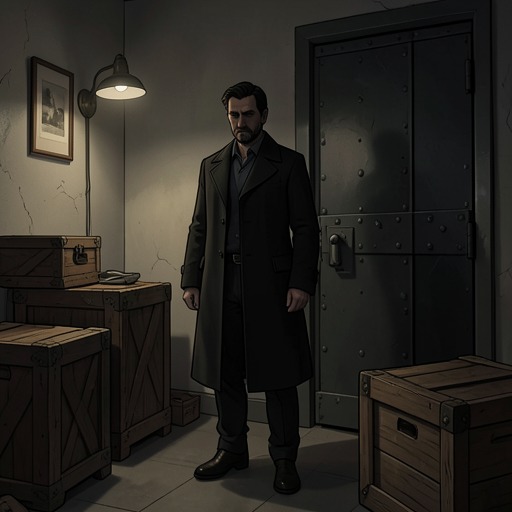
Kaori
A ManKaori, Kido’s wife and Sota’s mother, is a central presence in the story’s portrait of a marriage under strain: her care for her family is real, but the limits of that care and the couple’s failure to communicate leave both spouses increasingly isolated. Kido first met her at a frivolous party, not through the respectable introduction they later claimed, and over the years their shared version of their beginning became easier to repeat than the embarrassing truth. Their home and ordinary family routines endure, but the story gradually makes clear that routine can conceal distance as readily as it can sustain a family.
Identity and Family Background
Kaori is three years younger than Kido and works at a car company. She comes from a well-to-do family that has lived in Yokohama for generations: her father is a dentist, and her older brother is an internal-medicine doctor who renovated their father’s office to establish his own practice. The family is conservative but generous, and it helped Kido and Kaori with the down payment on their condominium. Kido and Kaori bought the ninth-floor home near Yokohama Chinatown four years before the narrative’s domestic scenes, taking out thirty-five-year mortgages. Its layout was meant for two children; they had hoped to have a second child soon after Sota’s birth, but that plan did not come to pass, and eventually neither spoke of it.
When Kido asked Kaori’s father for permission to marry her, he welcomed him despite his Zainichi background, saying, “Zainichi or not, after three generations you’re a full-blown Japanese.” Kaori’s mother tried to show polite interest in Korea during the Korean Wave of the 2000s, asking Kido questions about it, but stopped when she realized he could barely answer and could not read the Korean alphabet. Kido initially treated his in-laws’ acceptance as straightforward. After the earthquake, however, news coverage of the massacre of Koreans after the 1923 Great Kanto Earthquake, and of Yokohama’s role in the spread of false rumors about a “Korean riot,” made him wonder whether his father-in-law’s welcome had carried implications he had not understood.
The story also reveals that Kido and Kaori’s official account of meeting through an acquaintance is a mutually maintained fiction. They actually encountered one another at a party marked by crude conversation, forced laughter, and performed enthusiasm. Kido later wished they had met in circumstances more fitting the serious spouses they became. They never discussed the real encounter together; repeating the more respectable story had made it feel almost true. The contrast between their embellished origin and their increasingly difficult present gives their marriage a quiet irony: even its public account has become a substitute for a conversation they never had.
Marriage and Growing Estrangement
Kido and Kaori’s life together is marked at first by recognizable domestic routines: meals, caring for Sota, and sharing a home. Yet after the Great East Japan Earthquake, they stopped having a sexual relationship, and over time their physical and emotional distance became harder to ignore. After ten years of marriage, Kido could identify no single event that had caused their relationship to deteriorate. In recent months, they avoided touching even by accident, each maintaining a wary distance from the other. Kaori tried to keep arguments with Kido from escalating by restraining her emotions, but that restraint sometimes coincided with increasingly severe scolding of Sota—behavior Kido had not seen from her in their earlier years together.
A disagreement about Sota’s education shows how an ordinary parenting question could expose their inability to talk calmly. After Kaori sharply reprimanded Sota for failing to complete his Kumon math homework, Kido defended him, arguing that there was no need to press a young child so hard over arithmetic. The exchange became an argument. Kido also suggested that Kaori might be tired from taking Sota to his many lessons; intended as consideration, the remark made her angrier, and Sota received a severe scolding. Kido understood from his divorce work that child-rearing disputes often become a source of lasting marital discord, but he found their inability to discuss this comparatively small matter unusual. He seriously considered divorce for the first time, wondering whether Kaori might be better off starting over with someone else—and whether he, too, might regain his composure apart from her.
Sota’s growing resistance to his mother’s commands intensified the friction between them. Kido understood it as a normal part of a child developing a sense of self, but the clashes between mother and son had become a cycle: Kaori’s commands prompted rebellion, and the rebellion provoked harsher responses. Kido tried to raise the issue, but did so timidly, afraid that interfering might damage the marriage beyond repair. Afterwards he consoled Sota in his room and during bath time, hugging him and listening, while recognizing that this support did not make up for his failure to address the problem openly. His worry about what kind of father he was becoming became inseparable from his worry about his marriage.
Suspicion, Work, and Different Ideas of Care
Kido rarely discussed his work at home, partly because client confidentiality mattered and partly because Kaori showed little interest in it. Until his trip to Miyazaki, either spouse could stay overnight elsewhere by saying it was for work, and that was ordinarily enough. This time, however, something about Kido’s trip seemed suspicious to Kaori. He initially laughed off her concern as paranoia, then wondered whether it reflected some other stress. When he raised that possibility, she denied it; afterwards, her silence seemed to fall less consistently on Kido and her treatment of Sota grew unusually harsh. Kido lost his temper, though not in a full outburst, and recognized that he was less composed with his wife than he believed himself to be.
Kido assumed Kaori suspected him of becoming involved with Rié, though he could find nothing in his communications with Rié that would reasonably invite that interpretation. He judged the suspicion groundless. Later, as his feelings about Misuzu changed after he had impersonated Daisuké in a bar, he reconsidered the possibility that Kaori’s unease might have been connected to Misuzu rather than Rié. Even that explanation struck him as implausible. The shifting possibilities expose how little he knows about what Kaori suspects: instead of asking her directly, he tries to solve her concern by reasoning from his own hidden feelings.
Their differences also concern the reach of responsibility beyond their household. Kido worked with people who had left areas affected by the Fukushima Daiichi Nuclear Power Plant meltdown without being officially required to evacuate. Some sought help changing subsidized temporary housing that was dilapidated or made difficult by local harassment, but moving without meeting the program’s strict conditions could cost them their housing support. Among the cases Kido encountered were mothers separated from husbands by disagreement over radiation risks, living austerely with their children while hoping the family might reunite. Some cases ended in divorce. Kaori could not understand Kido’s commitment to this work. The narrative describes her kindness as sharply bounded: she knew Sota’s daycare friends by name and socialized with their mothers, yet assumed she need not concern herself with children suffering far away. She also regarded Kido’s regular donations to Doctors Without Borders and UNICEF as one of his professional quirks. Their different responses to suffering remained largely unspoken, but both had begun to sense that the difference mattered.
Family Conflict and Uneasy Communication
The divide between Kido and Kaori becomes especially visible in their responses to crime and punishment. When Sota had just turned one, the couple watched the news and discussed what should happen if someone murdered him. Kaori said the murderer should be executed. Kido replied that under Japan’s laws, the death penalty would not apply for murdering a single person. His legal answer did not settle the deeper disagreement: Kido’s views about individual responsibility and the state’s treatment of people were difficult for him to discuss, and he did not think Kaori understood his reasoning. The exchange reflects a wider divide in how each approaches suffering, responsibility, and what justice should mean.
Kido also sees Kaori’s care as concentrated on the people within her immediate circle. She remembers Sota’s playmates and builds relationships with their mothers, while Kido’s professional commitments and donations extend his concern beyond family and friends. The contrast is not simply between a caring spouse and an uncaring one: Kaori is attentive within her social world, while Kido himself admits that he does not feel grief for every stranger who dies. He becomes able to feel fear or sorrow by imagining strangers as himself or as people he knows. Their opposing habits of concern therefore reveal different ways of making distant suffering emotionally legible, as well as the difficulty of translating those differences into a shared domestic language.
Change and Narrative Significance
Kido eventually considers that the situation at home may be simpler than his elaborate explanations: perhaps Kaori no longer loves him. He recognizes that their relationship is already coming apart and resembles the marriages he handles professionally. That recognition does not immediately repair anything. Instead, it marks the point at which his attention begins to turn from diagnosing Kaori’s suspicions to acknowledging the possibility that the marriage itself is in danger.
After Kido and Kaori talk, he notices a change in her. She scolds Sota to tears less often, and although the change may require effort rather than arise spontaneously, Kido senses that she wants to improve life at home. He tries to reciprocate. He has gone once to a psychologist at Kaori’s request, but turned the appointment into a lively professional inquiry about the psychologist’s questioning methods and did not return. Kaori was relieved that he had gone, though she repeatedly postponed going herself; Kido did not force the issue. Instead, his growing understanding of the psychological burden she carried after the earthquake and amid spreading xenophobia made him feel both guilty for having been insensitive and grateful for her efforts.
Kaori’s importance lies in the way the story refuses to make marital distance legible through one decisive betrayal or argument. Their relationship frays through unspoken disappointments, different habits of care, parenting conflict, suspicion, and a history of avoiding uncomfortable truths—including the story they tell about how they met. Yet repair remains possible not through a dramatic declaration but through small, observable adjustments: Kido recognizes what he had failed to see, and Kaori makes an effort to change the atmosphere at home. Their marriage remains complicated, but it is no longer described only as a silence that neither spouse can interpret.